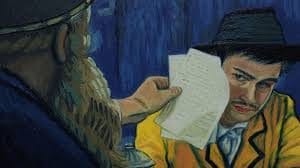
Why animate a film when you can shoot and illustrate it frame by frame? It has been a year and a half since the Polish/UK feature film Loving Vincent knocked critics off their feet in September of 2017. The murder mystery comprised entirely of oil paintings left audiences drowning in a pool of tears, in awe of its mind-blowing cinematic achievement. Despite confusion, the method in which the movie was made has been classified as a form of animation, although the movie was shot and then illustrated frame by frame. This begs the question: is the method close enough to stop motion to be considered a legitimate nomination for the Academy Award for Best Animated Feature Film?
Loving Vincent was originally imagined by its creators to be a seven-minute short film in 2008. It was later re-imagined by Dorota Kobiela, a Polish painter who studied Van Gogh’s methods through his letters. Thankfully, it made the jump across the pond to American theatres and saw availability in multiple languages, which made the film popular across Europe. Van Gogh’s style as a Dutch artist shaped the formation of modern-day European art, as well as modern artists worldwide. Fascinatingly, he painted over 8,000 works of art upon his death and The Red Vineyard at Arles was the only one that ever sold. It now rests in the Pushkin Museum of Fine Art in Moscow.
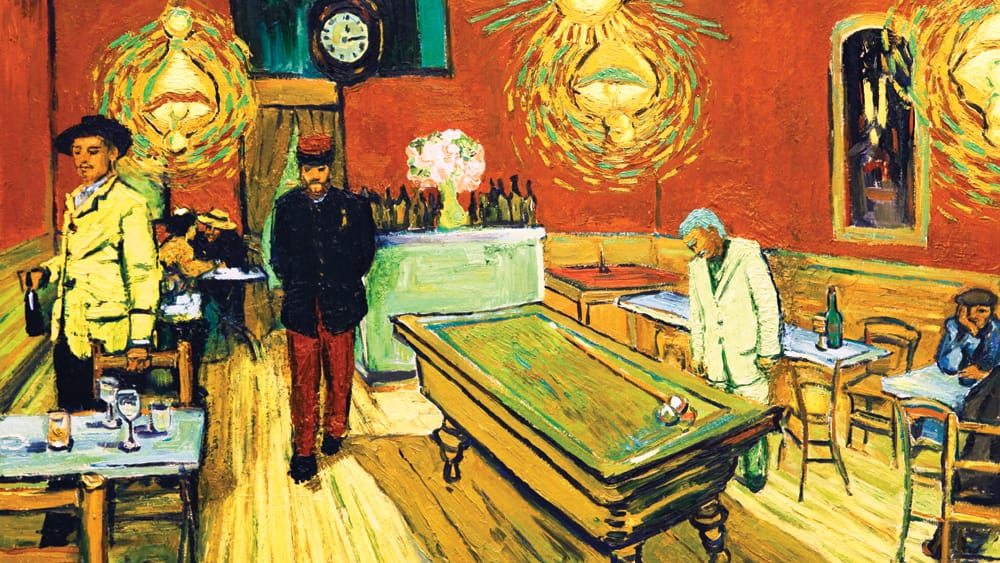
Audiences took the movie to be very in depth and rich with incredible detail, mainly within the illustration but also in the storyline. The filmmakers fit just about every detail revolving the story into an hour and thirty-five minutes. It is as if you’d finished a documentary by the time the credits roll. Almost like the air around the characters tells their backstory as the film moves forward. However, some have questions on whether or not this film should have been eligible for an animated film award. To an extent, the film was shot in the same manner a regular movie. Then, they used what’s been labeled an “animation method” including 65,000 oil paintings. The method is similar to that of stop motion. However, the method has evolved since it’s first use in 1898. When asked, Dorota Kobiela said, “My goal was to use art to tell the story of an artist.”
As far as the story goes, it does a fine job of accurately noting what we know to be true and creating an enticing story out of what is not factually known. The artistic use of exaggeration within the history of cinema has been used to bring the audience deeper into a story, and despite many successful uses, it is not an easy thing to pull off. In one of the first opening scenes, Roulin doesn’t have to say anything in order to tell the audience how he views Van Gogh, which is an ill man that cost his father’s reputation in their community. Every character has to be explained in anywhere from an hour and a half to three hours, primarily through the use of facial expressions. Anyone in the US lucky enough to have seen it would no doubt understand the characters and their intentions from an hour and thirty-five minutes. The misconception came when critics on major film sites such as IMDb and Fandango described the air as what was explaining the characters. Rather, it was the facial work exaggerated by the illustrator. Particular scenes were more heavily filmed before they were illustrated, specifically scenes with excesses in motion. They are still obviously illustrated. However, from a cinematic standpoint, you can tell that for the motion to be as fluid as it is the filmmakers would need to shoot the scene and then illustrate based on the footage. One particular scene that breaks the spell main character Armand Roulin, played by Douglas Booth, meeting a boatkeeper by the river in the last home of Vincent Van Gogh. As the scene progresses, a profile shot of the riverman standing in front of a riverside bush develops. However, as this happens, wind sound effects are used to make the outdoor scene more realistic, but it only makes the scene seem less realistic to the audience as they see that the brush and trees in the background aren’t moving. Subconsciously, this makes the scene look much less professional to the naked eye.
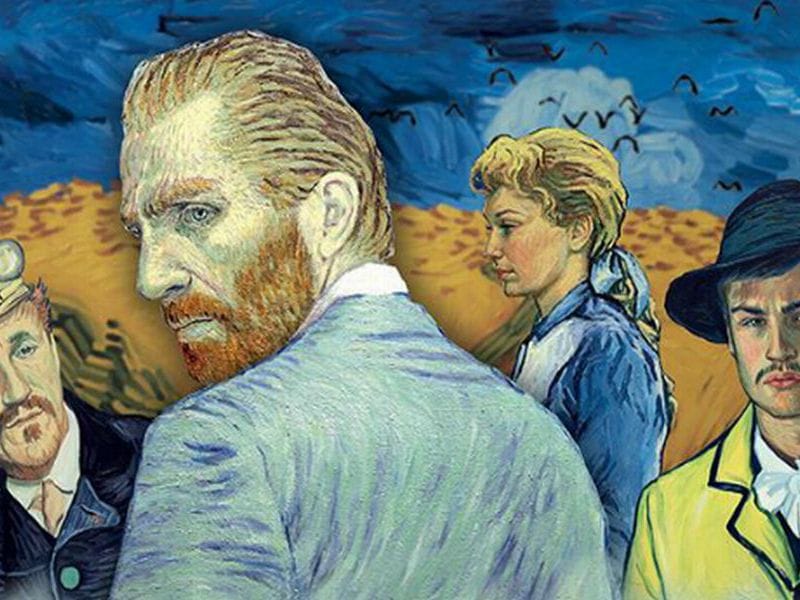
Despite minor errors, Loving Vincent illustrates a story explaining the last days of, and more importantly, the motive for, the father of modern day art. The arc of Van Gogh’s childhood is downtrodden. He and his younger brother Theo were the only children of his family generation to survive past 18 years old. According to the film, Van Gogh spent most of his life trying to live up to the standards his deceased siblings had established with his mother, which he could never measure up to in her eyes. Despite this, he and Theo managed to survive and grew up close to each other via mail. Their mutual mail carrier is the father of main character Armand Roulin, whose main goal is to deliver Vincent’s last letter to Theo. Along the way, he gathers that Theo suffered from General paresis of the insane, and had died as a direct result of Vincent’s death. He begins to wonder how much of Van Gogh’s death was an accident. In the end it turns out Vincent’s cause of death was suicide, as a result of a mental breakdown. Throughout the story, Roulin learns all the simple things that happened to Van Gogh before his death and how the choices he himself made are similar to the ones that led Vincent to his end. At the start of the film, Roulin is livid about how he is asked to deliver Vincent’s final letter, and is wondering why his father is so hell bent on having Roulin deliver it. He eventually comes to realize that his father sympathized for Vincent, considering Van Gogh had a breakdown and most of his home town turned against an ill man. All in all, Armand fails to understand what his father understood. With his son as an alcoholic with a temper, he could lose him at any moment, he would want his son’s last letter, assuming he had written one. Just like everyone in the audience would want a letter from a recently deceased family member.